Moringa (Moringa oleifera)
Moringa — the drumstick tree, known across India as saragva or sahjan — is a food first and a supplement second. Its leaves and pods have been eaten as everyday nutrition for generations, long before capsules existed. Treat it as a nourishing green, not a medicine.
Also known as: Saragva · Sahjan · Drumstick tree · Kalamunggay · Munga | Part used: Leaves and pods (drumsticks) — as food
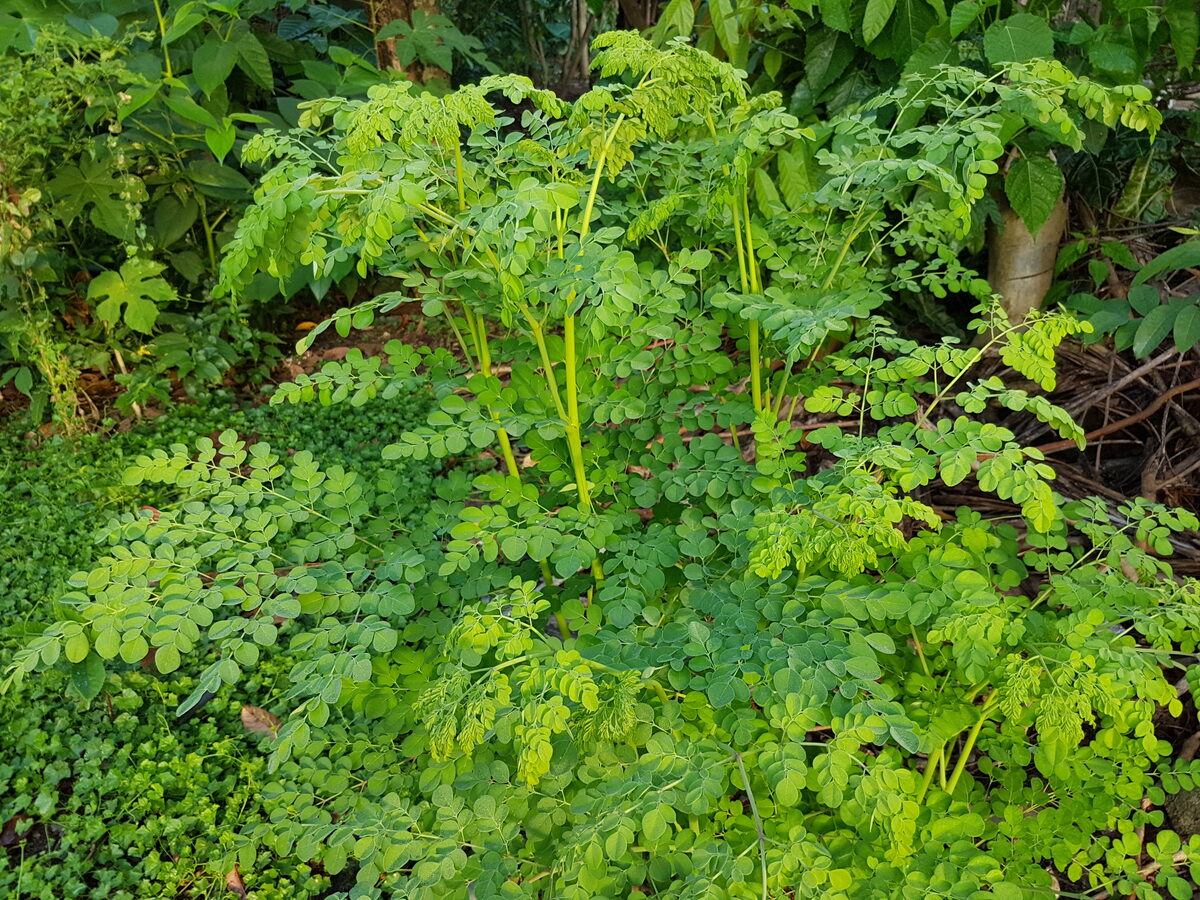
Traditional use — food first
In Indian households the drumstick tree is a kitchen plant: the pods (drumsticks) go into sambar and dal, and the leaves are cooked like any leafy green into sabzi, soups, and khichdi.
In traditional Ayurvedic and folk practice the leaf has long been valued as a strengthening, nutrient-dense food — often called a "poor man’s greens" precisely because it grew freely and fed families for very little.
The plant was used food-first: fresh leaves and pods on the plate, not concentrated extracts. That is the frame we keep here — food, not a cure.
What we actually know
Moringa leaf is a genuine source of everyday nutrients: beta-carotene (a vitamin A precursor), vitamin C, calcium, iron, and plant protein. This is nutrition, plain and simple.
The leaf also carries polyphenols and other antioxidant compounds that have been looked at in early studies. Human evidence is still limited and mostly small trials — promising as food, not proof of any treatment.
No supplement — moringa included — treats, cures, or prevents any disease. If you have a health concern, a doctor comes first; a green like this is support around the edges, not the answer.
How to tell real from adulterated
This is where most buyers get quietly cheated. Cheap moringa powder is easy to bulk out or sell old — here is what separates genuine material from the filler:
Colour: real leaf powder is a deep, dull forest green. Bright neon-green powder is a warning sign — it can mean added colour, or stems and other greens milled in to bulk it up.
Smell: it should smell fresh, green, faintly earthy — like dried spinach or tea. A musty or hay-like smell means old or badly dried stock that has lost its value.
Drying: prefer powder milled from shade-dried leaves. High-heat drying is cheaper but quietly degrades the nutrients you are paying for.
Testing: moringa pulls heavy metals out of poor soil, so a third-party / lab certificate (COA) for heavy metals genuinely matters here. A named single-origin leaf beats a vague "herbal blend".
Label honesty: on a capsule product, the label should print the actual milligrams of moringa leaf per serving. If it is hidden inside a "proprietary blend," you cannot tell how much you are really getting.
Traceability: look for a batch/lot number and a harvest or best-before date. No dates, no lot number — no way to trust freshness.
Safety & who should check first
- The leaves and pods are widely eaten as food and are generally well tolerated in normal food amounts.
- Leaf is not the same as root. Moringa root and root bark are traditionally avoided — especially in pregnancy — so stick to leaf-based products.
- If you are pregnant or breastfeeding, on medication (blood sugar, blood pressure, or thyroid especially), or managing a medical condition, talk to your doctor before taking concentrated moringa supplements.
- Start small and go slow. With a nourishing food like this, more is not better — a sensible daily amount beats megadosing.
Why you can trust this page
A note of honesty: our editorial lead grows 10–15 moringa (saragva) trees on his own farm and has eaten the leaves and drumsticks since childhood. This guide reflects that hands-on, food-first experience — not a marketing sheet. Fresh farm leaf and cheap commercial "blend" powder are worlds apart, and knowing the difference is the whole point of this page.
Sources & further reading
- USDA FoodData Central — Moringa oleifera leaves, raw
- NIH / PubMed — Moringa oleifera research overview
This guide is editorial reference content, not medical advice, and describes Moringa as a food and traditional ingredient. It does not diagnose, treat, cure, or prevent any disease. Talk to a qualified doctor before starting any supplement. Last updated 2026-07-15.